Diagnose from the final consumer backward
Cargo transfer failures are easier to solve when you begin at the destination. Confirm that the final industry or town district currently accepts the cargo. Then follow the chain backward through every terminal and line to the producer.
This order separates a real capacity problem from a route that was never valid. Cargo is controlled by the paths and configurations the player provides; it does not choose a destination independently like a resident choosing a trip.
The seven-link test
- Consumer: explicitly demands the cargo.
- Final station: reaches the consumer through its catchment.
- Final vehicle: accepts the cargo specialization.
- Transfer group: inbound and outbound terminals are actually connected.
- Inbound vehicle: unloads at the transfer.
- Origin station: reaches the producer.
- Producer: has output stock or can produce the item.
Stop at the first failed link. Everything earlier in the chain can appear healthy while cargo still has nowhere valid to go.
Truck to train
Place the truck station so it covers the producer and the transfer terminal so the road and rail components form a usable hub. The train must accept the cargo and visit a destination station connected to a valid consumer or another complete transfer.
If trucks unload but trains leave empty, check terminal grouping, cargo filters and train compatibility. If cargo never reaches the truck stop, check the producer’s output stock and station catchment.
Train to truck
At the destination hub, the local delivery line must lead to the correct district or industry. A town can demand different cargo in commercial and industrial districts, so a stop on the wrong side of town may not complete the chain.
Do not assume proximity means access. Use the catchment display and inspect the receiving building or district.
Ship and air transfers
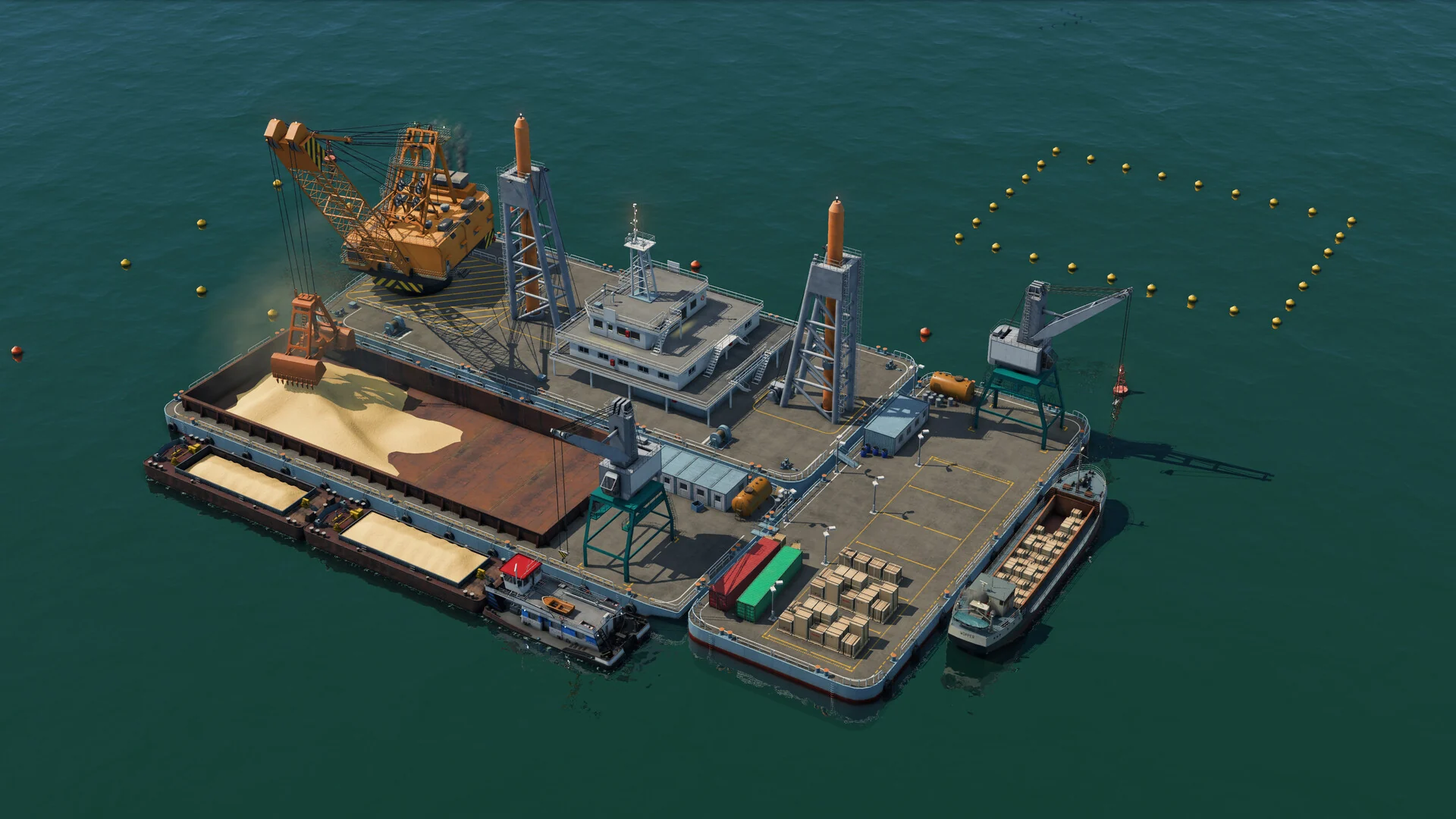
Water and air services add longer cycles and larger capacity steps. A terminal may appear empty for longer between arrivals. Check the line schedule over a complete cycle before concluding that the transfer is broken.
Large vehicles can also arrive full while the local distribution network is too small. When cargo piles up after unloading, strengthen the downstream stage rather than adding another ship or aircraft.
Symptom table
| Symptom | Most useful first check |
|---|---|
| No cargo at origin | Producer output and origin catchment |
| Cargo waits at origin | First vehicle compatibility and load rules |
| Cargo waits at transfer | Next vehicle, terminal group and final demand |
| Vehicles arrive but leave empty | Cargo filter, specialization and valid destination |
| Final station fills continuously | Last-mile capacity or consumer access |
| Cargo disappears from an overflowing industry | Output collection is too slow; excess can be destroyed |
Test one change at a time
Temporarily simplify filters, run one compatible vehicle and observe a full cycle. Once the basic transfer works, restore specialized rules carefully. This is faster than rebuilding the entire hub and preserves evidence about the original failure.