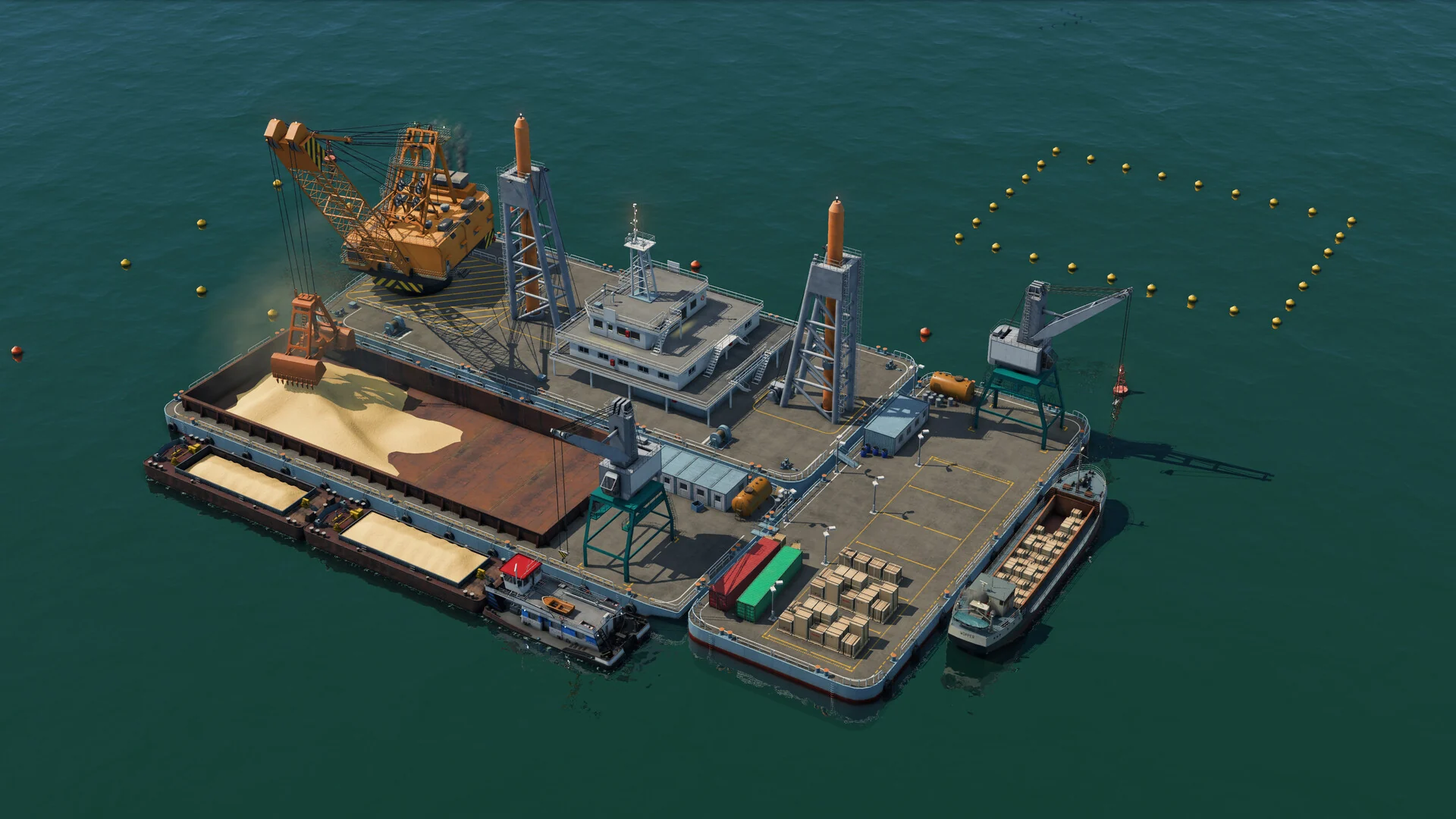
Trace the oil chain first
Confirm which cargo the offshore or coastal industry produces and which downstream industry consumes it. Oil-related chains can include several stages, so a port-to-port service is useful only when land-side connections continue to a valid processor or final demand.
Port checklist
- The port reaches the producing industry or transfer facility.
- The ship accepts the cargo specialization.
- The water route is physically navigable.
- The destination port belongs to the intended transfer group.
- A downstream vehicle can carry the cargo.
- The final industry accepts the item.
Loading and cycle time
Ships have long cycles and large capacity. Observe a complete round trip before judging an empty-looking port. If ships remain lightly loaded, reduce capacity or improve collection rather than immediately adding another vessel.
If the origin fills while ships are away, more water capacity may help. If the destination port fills, strengthen the land-side route. The largest vehicle is not automatically the bottleneck.
Port approach and transfer space
Leave room for truck or rail access without blocking the same road used by local traffic. A successful ship can unload a large batch at once, so the transfer must absorb peaks rather than only the average flow.
Symptom order
- No cargo at origin: production and catchment.
- Cargo waits at port: ship type, line and loading rule.
- Cargo waits after unloading: connected terminal and downstream capacity.
- Ship cannot path: navigable route and terminal assignment.
- Chain stops at refinery or factory: missing next input or consumer.